An Introduction to Quantum Cryptography
What is Quantum Cryptography?
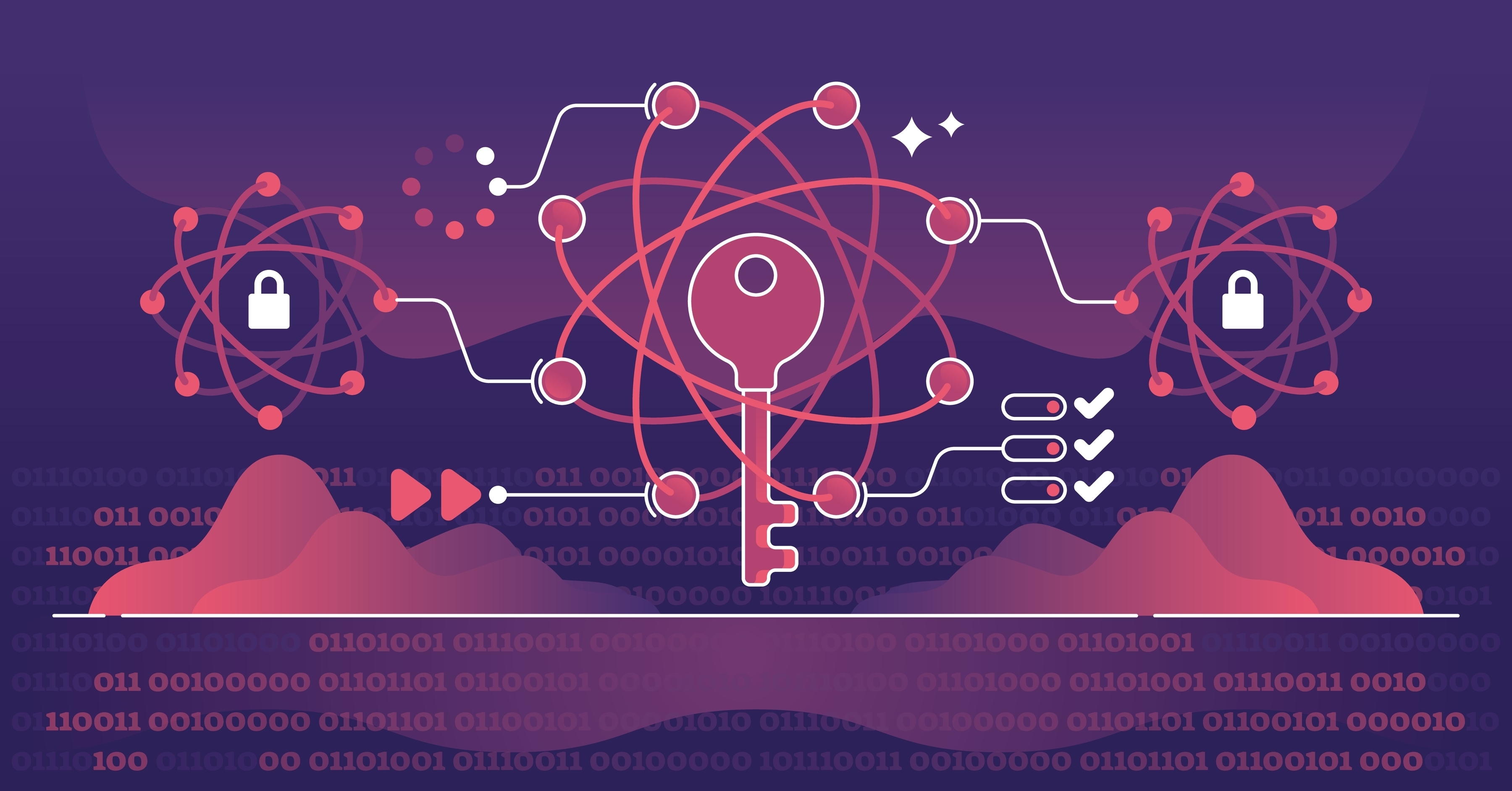
Quantum cryptography is a cutting-edge field that leverages the principles of quantum mechanics to secure communication channels. Unlike classical cryptography, which relies on mathematical algorithms and computational complexity (such as RSA or AES), quantum cryptography uses physical properties of quantum particles—primarily photons—to ensure unbreakable security. The most famous application is Quantum Key Distribution (QKD), which allows two parties to generate and share a secret encryption key in a way that detects any eavesdropping attempts.
Developed in the 1980s by pioneers like Charles Bennett and Gilles Brassard (with their BB84 protocol), quantum cryptography has evolved from theoretical concepts to practical implementations. By 2025, real-world deployments are expanding, with systems operating over fiber-optic networks and even satellite links for global reach.
Key Principles Behind Quantum Cryptography
At its core, quantum cryptography exploits two fundamental quantum phenomena:
- Superposition: Quantum bits (qubits) can exist in multiple states simultaneously until measured. In QKD, photons are polarized in ways that represent 0s and 1s, but their state isn't fixed until observed.
- Entanglement: Pairs of particles can be linked such that the state of one instantly influences the other, regardless of distance. This "spooky action at a distance" (as Einstein called it) enables secure correlations between distant users.
- No-Cloning Theorem: It's impossible to create an identical copy of an unknown quantum state without disturbing it. This means any attempt by an eavesdropper (often called "Eve") to intercept and measure the quantum signals will introduce detectable errors.
In a typical QKD setup:
- Alice sends polarized photons to Bob over a quantum channel (e.g., optical fiber).
- Bob measures them using random bases (rectilinear or diagonal).
- They compare a subset of measurements publicly to detect errors, which indicate eavesdropping.
- If secure, they distill a shared key from the remaining bits.
This process doesn't transmit the message itself but secures the key for symmetric encryption of classical data.
Applications and Real-World Use Cases
Quantum cryptography is particularly vital in an era of quantum computing threats. Traditional encryption could be broken by quantum algorithms like Shor's, which factorizes large numbers exponentially faster. Here's where quantum crypto shines:
- Secure Communications: Governments and militaries use QKD for classified data. For instance, China's Micius satellite demonstrated space-based QKD in 2017, and by 2025, networks like the European Quantum Internet Alliance are integrating it into infrastructure.
- Financial Sector: Banks employ quantum-secure links for transactions. Swiss banks and companies like ID Quantique have commercial QKD systems protecting high-value transfers.
- Healthcare and Data Privacy: Protecting sensitive medical records or genomic data from future quantum attacks.
- Quantum Networks: Emerging "quantum internet" prototypes connect quantum computers, enabling distributed computing with inherent security.
As of 2025, commercial products from firms like Toshiba, QuintessenceLabs, and MagiQ are available, with distances up to 100-500 km over fiber and longer via satellites.
Challenges and Limitations
Despite its promise, quantum cryptography isn't without hurdles:
- Distance and Loss: Photons can be absorbed or scattered in transmission, limiting range without repeaters. Quantum repeaters, which use entanglement swapping, are in development but not yet scalable.
- Cost and Infrastructure: QKD hardware is expensive and requires dedicated quantum channels, making it impractical for consumer devices like smartphones.
- Side-Channel Attacks: While the quantum protocol is theoretically secure, vulnerabilities in physical implementations (e.g., detector blinding) have been exploited in lab settings. Post-quantum cryptography (classical algorithms resistant to quantum attacks) is often used as a hybrid solution.
- Integration with Existing Systems: Bridging quantum and classical networks remains complex, though standards from bodies like ETSI and NIST are advancing.
Research in 2025 focuses on device-independent QKD (which doesn't trust the hardware) and measurement-device-independent variants to mitigate these issues.
The Future of Quantum Cryptography
Quantum cryptography represents a paradigm shift toward "information-theoretic security"—provably secure based on physics, not assumptions about computational power. With quantum computers like those from IBM, Google, and IonQ advancing rapidly, the urgency for quantum-safe solutions is high. Initiatives like the U.S. National Quantum Initiative and China's quantum supremacy claims are accelerating adoption.
In summary, while not a silver bullet, quantum cryptography is a cornerstone of future cybersecurity. As technology matures, it could safeguard everything from elections to AI data exchanges, ensuring privacy in a quantum world.
If you'd like more details on specific protocols, recent advancements, or diagrams (e.g., a visual explanation of BB84), let me know!
Comentários
Enviar um comentário